
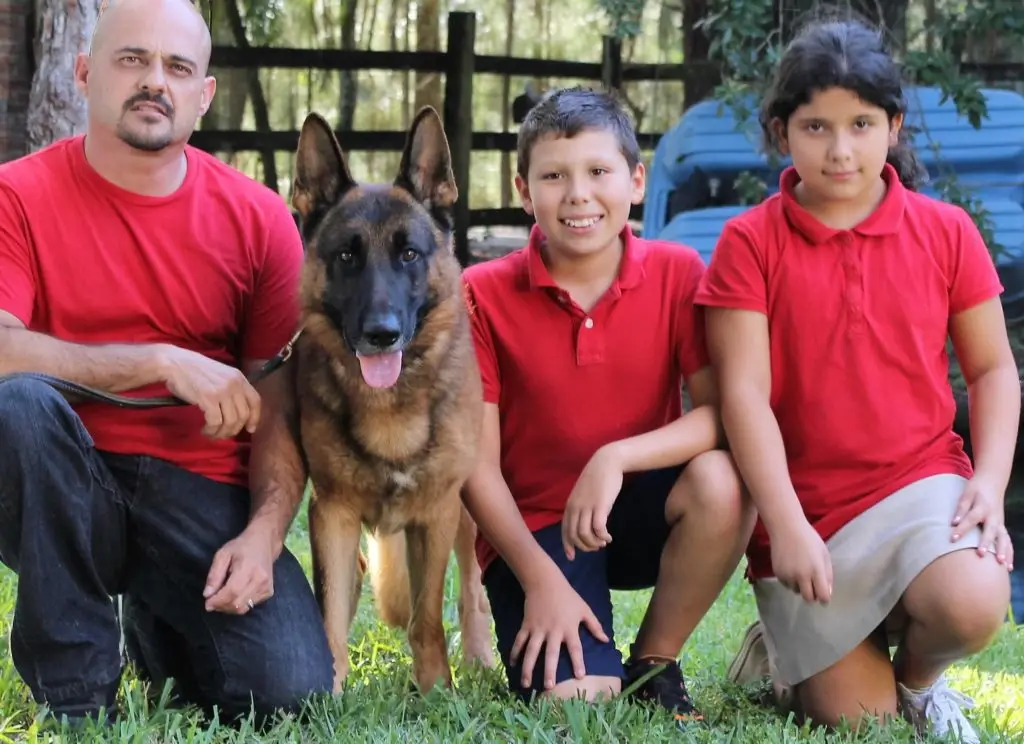
The Bonding Phase: Why the First Few Weeks Matter More Than Most Owners Realize
“One of the biggest misconceptions surrounding professionally trained dogs is the belief that training replaces responsible ownership. It doesn’t. Professional training provides an exceptional foundation, but every new owner plays an equally important role in shaping the relationship that develops after the dog arrives home. Lasting success is built through a partnership between the dog’s development, the family’s consistency, and the relationship they build together.”
Every dog—regardless of breed, age, previous training, or where it came from—goes through a bonding and adjustment period when entering a new home. This is not unique to professionally trained protection dogs; it is a normal and essential part of responsible dog ownership.
Whether you adopt a dog from a shelter, purchase a puppy from a breeder, or welcome a professionally trained family protection dog into your home, your dog must learn a new environment, new routines, new people, and a new way of life.
At High-Class K9, we refer to this important transition as the bonding phase.
It is one of the most important stages in your dog’s development because it establishes the relationship upon which everything else will be built.
Every Interaction Is a Training Session
Perhaps the single most important concept every owner can understand is this:
Every interaction with your dog is a training session, whether you realize it or not.
Every time you reward a behavior…
Ignore a behavior…
Correct a behavior…
Allow a behavior…
Or prevent a behavior…
…your dog is learning.
Some lessons are intentional.
Many are not.
This is why consistency matters far more than perfection.
Why We Recommend a Gradual Transition
During the first several weeks, your dog is learning much more than where to sleep or when meals occur.
Your dog is learning:
• How life works in your home.
• Who provides guidance and leadership.
• What behaviors are expected.
• Which routines can be trusted.
• How to become part of your family.
For that reason, we recommend avoiding the temptation to rush the process.
Gradually introduce visitors, new environments, and unfamiliar situations. Use the crate as a place of security rather than punishment. Establish predictable routines for feeding, walking, training, and rest. Allow trust to develop naturally through calm, positive experiences.
These recommendations are not arbitrary rules. They are practical guidelines designed to help your dog transition successfully into a new environment while building confidence, trust, and clarity.
Structure Builds Confidence
Many people assume bonding comes from constant affection.
In reality, dogs build confidence through predictability.
Clear routines.
Fair boundaries.
Calm leadership.
Consistent expectations.
Ironically, structure often creates a stronger emotional bond than unlimited freedom.
A Relationship Built Over Time
One of the most common mistakes owners make is believing that professional training eliminates the need for a bonding period.
It doesn’t.
Professional training provides your family with an exceptional foundation, but it does not replace responsible ownership. Like any meaningful relationship, trust is built through hundreds of consistent interactions over time.
Our goal has never been simply to provide professionally trained dogs.
Our goal is to help families build lasting relationships with dogs that become trusted companions for many years to come.
Four Principles to Remember
• Structure creates confidence.
• Consistency builds reliability.
• Time develops trust.
• Every interaction is a training session.
The strongest relationships are rarely built through one extraordinary moment.
They are built through hundreds of ordinary interactions, repeated consistently over time.