
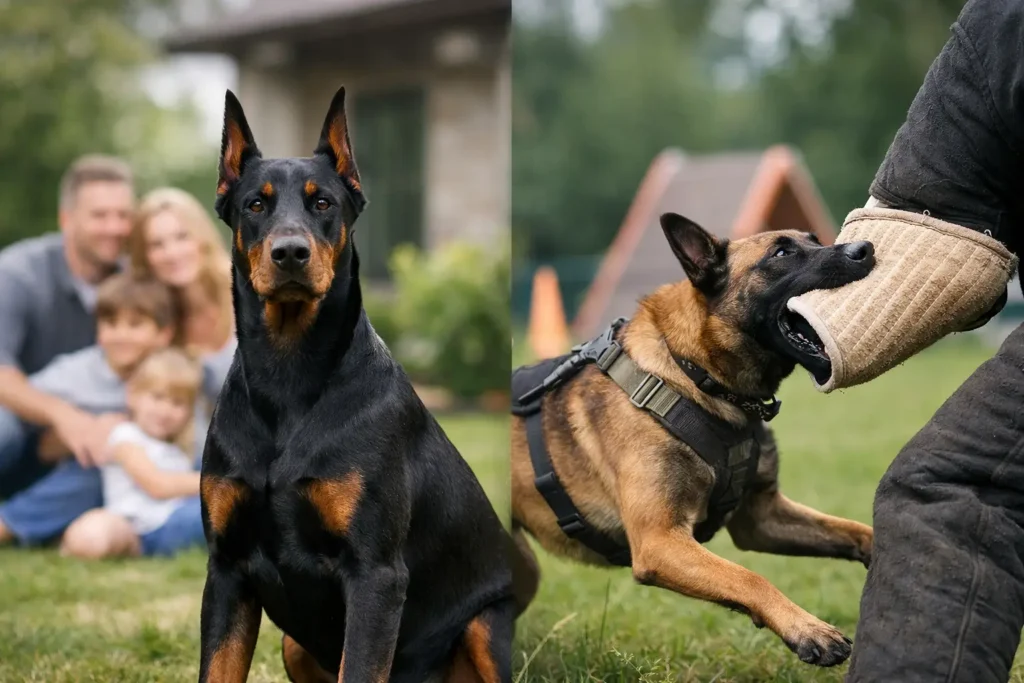
A family protection dog vs sport dog comparison is not about deciding which type of dog is more impressive. It is about deciding what belongs in your home, around your children and guests, and beside you during ordinary life. For a family seeking quiet confidence and meaningful security, the distinction is fundamental.
A sport dog may be exceptionally talented, driven, and highly trained. A properly selected family protection dog must meet a different standard: stable enough to relax in the home, affectionate enough to become part of the family, and discerning enough to respond only when a genuine situation requires it. Those qualities do not happen by accident. They begin with temperament and are refined through thoughtful training and placement.
Family Protection Dog vs Sport Dog: Different Purposes
Sport dogs are developed for structured performance. Their work is often measured in clear exercises, defined rules, precision, speed, and intensity. Whether the discipline emphasizes obedience, tracking, agility, or protection sport, the dog is expected to perform confidently within a controlled framework. These dogs can be remarkable athletes with extraordinary focus and commitment.
A family protection dog has a more personal assignment. The dog must live comfortably in the rhythms of a household while offering a calm, credible layer of deterrence and protection. That means settling at dinner, remaining composed when friends visit, traveling well, and reading the difference between normal activity and a meaningful concern.
The distinction matters because real family life is not a trial field. It includes children running through the house, delivery drivers at the door, service staff, unfamiliar environments, vacations, and spontaneous changes to routine. A dog chosen for this role needs clarity, restraint, and an off-switch as much as confidence and capability.
The Temperament That Makes a Dog Easy to Live With
Drive is often celebrated in working-dog circles, and for good reason. Drive can produce enthusiasm, speed, and commitment. Yet high drive alone does not make a dog a suitable household protector. In some homes, an intensely stimulated dog can become demanding, difficult to settle, or overly reactive to everyday activity.
For family placement, emotional stability carries enormous value. The right dog is environmentally sound, socially clear, and comfortable moving through the world without treating every new person, sound, or setting as a challenge. The dog should be engaged with its family without becoming anxious, possessive, or indiscriminately suspicious.
This does not mean a family protection dog is passive. A well-bred, fully trained dog should have presence. People notice a composed, attentive dog. Often, that presence is the protection a family needs most. Effective deterrence is rarely loud or theatrical. It is the quiet understanding that a capable dog is present, under control, and closely bonded to the people it lives with.
Confidence Is Not Constant Intensity
A common misunderstanding is that a more intense dog offers better protection. In reality, constant intensity can be a poor fit for a residence, particularly one with children, frequent visitors, or a demanding travel schedule. The strongest household dogs know when nothing is required of them.
True confidence looks calm. It is the dog that can rest peacefully beside the family, remain neutral through normal interactions, and become focused only when its handler needs it to. That balance supports both security and quality of life.
Training for the Living Room, Not Just the Field
Training quality should be judged by how reliably it transfers to daily life. A dog may perform beautifully in a familiar training environment and still struggle with the unpredictability of a busy home, a hotel lobby, or a new property. The family protection standard is broader because the dog must operate with composure across real-world settings.
Advanced obedience is central to this. A family should be able to enjoy a meal, welcome a guest, take a walk, or travel with their dog without managing chaos. Clear obedience gives the household practical control, but it also gives the dog direction. The dog understands its role and does not have to make decisions that belong to its owner.
Controlled deterrence and situational protection add another layer. These abilities should be developed with discipline, not encouraged as generalized aggression. A dog that cannot distinguish a normal encounter from a threat does not create peace of mind. It creates another source of concern.
The best protection dogs are not looking for conflict. They are secure, responsive companions whose training provides an appropriate response if one is needed. For most discerning households, that measured temperament is far more valuable than a dramatic display of power.
How Household Compatibility Changes the Decision
The right choice depends on the household. A seasoned sport enthusiast who enjoys regular training, structured outlets, and competitive goals may genuinely thrive with a sport-focused dog. There is nothing lesser about that path. It simply calls for a different lifestyle and a different expectation of the dog.
Families seeking integrated protection should begin elsewhere. Consider the people who will live with the dog every day, the pace of the home, visitor patterns, travel habits, other pets, staff, and the owner’s comfort with handling a powerful dog. A protection dog should fit the family’s life rather than require the family to reorganize its life around the dog.
This is why selective placement matters. The same dog can be exceptional in one environment and the wrong choice in another. Size, energy level, social confidence, and handling sensitivity all affect the match. A sophisticated placement process looks beyond appearance and pedigree to the details that determine whether daily life will feel natural.
Questions Worth Asking Before You Choose
Before choosing any trained protection dog, a buyer should ask what the dog is like during its quiet hours, not only when it is working. How does it behave around children and welcomed guests? Can it settle indoors? Is it comfortable in unfamiliar places? Does it travel easily? What ongoing guidance is available after placement?
The answers reveal more than a demonstration can. A dog’s ability to transition from alert companion to relaxed family member is one of the clearest signs that the placement has been considered with care.
Why Long-Term Stewardship Is Part of Protection
A trained dog arrives with valuable skills, but the relationship continues to develop after delivery. New homes, routines, boundaries, and family dynamics all require a period of adjustment. Owners deserve clear education and direct support as the dog settles into its role.
This is especially true for clients who have never lived with a protection-trained dog. They should not be expected to become trainers. They should understand how to communicate clearly, maintain the dog’s obedience, introduce new situations appropriately, and preserve the calm structure that allows the dog to flourish.
At High Class K9, placement is approached as a long-term responsibility. The goal is not merely to place a highly trained dog, but to help create a successful partnership between the dog and the people it is trusted to protect. Founder-led guidance, thoughtful matching, and continued stewardship are part of what makes confidence sustainable.
The Better Question Is What You Need at Home
When comparing a family protection dog and a sport dog, focus less on labels and more on the life you want to share with the dog. If you want a serious training hobby and structured performance, a sport dog may be an excellent choice. If you want an affectionate companion whose capability is present but not disruptive, family protection placement deserves a more careful evaluation.
The ideal dog should make your home feel more secure without making it feel less like home. That is the standard worth protecting.