
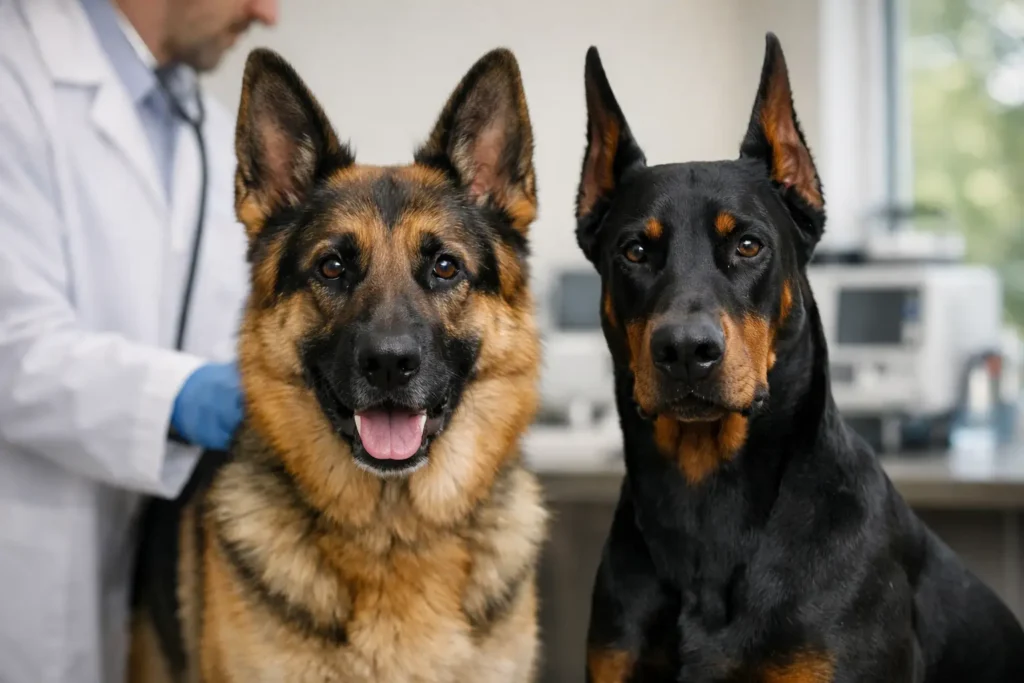
When a protection dog moves into a private home, the standard should be far higher than basic obedience or impressive control work. Health tested protection dogs matter because the dog is not simply being asked to perform. The dog is being asked to live closely with a family, travel well, remain stable under pressure, and provide confidence over the long term.
That changes the conversation immediately. For discerning families and executives, protection is only part of the decision. The larger question is whether the dog can integrate naturally into daily life without introducing avoidable risk, discomfort, or uncertainty later. Health testing is part of that answer.
What health tested protection dogs really mean
The phrase is often used loosely, which is where buyers can get misled. Health tested protection dogs should not mean a dog merely appears athletic, energetic, or impressive on arrival. It should mean the dog has been evaluated with the future in mind, with attention to structural soundness, long-term comfort, and suitability for a demanding role inside a household.
A true family protection dog is expected to do much more than deter a threat. The dog should settle in the home, move confidently in public, handle travel, engage with the family appropriately, and remain physically capable of fulfilling its role without strain. If the dog has underlying orthopedic issues or inherited health concerns, those problems rarely stay hidden for long. They show up in stamina, ease of movement, comfort, confidence, and reliability.
That is why health matters so much in this category. A protection dog that looks polished in a short demonstration but struggles with discomfort six months later is not a wise placement. In a premium environment, buyers are not looking for a short-lived impression. They are looking for a sound companion they can trust to live with them well.
Why health testing matters in real family life
Protection work places unique expectations on a dog, but the most demanding part is often not the occasional security scenario. It is the consistency of everyday life. A dog that lives in the home needs to be physically comfortable enough to remain emotionally steady. Pain and instability can change behavior in subtle but significant ways.
A dog with unresolved joint issues may become less tolerant, less eager to engage, or less dependable in transitions and travel. A dog carrying structural weakness may not show obvious problems during a brief visit, yet over time the household begins to notice stiffness, reluctance, slower recovery, or a change in demeanor. Those changes affect quality of life for the dog and confidence for the family.
For homes with children, frequent guests, staff, or a dynamic travel schedule, this matters even more. The right dog should feel composed in ordinary moments. Physical soundness supports that ease. It is difficult to separate health from temperament entirely because discomfort often changes how a dog interacts with the world.
This is one reason experienced placement companies treat health testing as part of the matching process, not a marketing detail. A dog can be affectionate, trained, and visually striking, yet still be the wrong long-term choice if soundness is questionable.
Health tested protection dogs and long-term value
Buyers in this category are usually not comparing dogs the way someone shops for a commodity. They are evaluating trust, discretion, and long-term outcome. In that context, health tested protection dogs represent value in the most practical sense.
A carefully selected, health-screened dog is more likely to remain active, comfortable, and dependable over time. That does not mean testing guarantees perfection. No ethical professional should present it that way. Biology always includes some unpredictability. But health testing significantly improves the odds that the dog you welcome into your home is built for a long, stable working life.
That distinction matters because the cost of a poor placement is never just financial. It can disrupt household routines, reduce confidence in the dog’s protection role, and create emotional strain when a family has already bonded with the dog. Premium placement should reduce those risks, not pass them on to the client.
For many households, peace of mind comes from knowing the dog was selected with discipline and foresight. Training matters. Temperament matters. Placement guidance matters. Health testing belongs in that same conversation because it protects the integrity of the entire experience.
What serious buyers should look for
A refined protection dog program should be willing to discuss health clearly and without evasiveness. Serious buyers do not need a flood of jargon, but they should expect professionalism and transparency. If a provider focuses only on protection demonstrations and avoids meaningful discussion about physical soundness, that is a concern.
The better question is not simply, Was the dog tested? It is, How does health factor into selection, placement, and long-term suitability for my household?
That leads to a more useful conversation. For example, a household with young children, regular travel, and an active lifestyle may need a different type of dog than a single executive with a quieter routine. The health and physical structure of the dog should support the life the dog is actually going to live. Sound placement is never one-size-fits-all.
It is also wise to consider whether the business stands behind the dog after delivery. Written health assurances, thoughtful education, and continued stewardship all suggest a higher level of accountability. In premium protection dog placement, the relationship should not end once the dog arrives. It should continue through transition, adjustment, and ownership.
The balance between protection and companionship
One of the most common mistakes in this space is assuming the strongest protection dog is automatically the best choice. In reality, the right dog is the one that balances deterrence, stability, affection, and everyday livability.
Health supports that balance in quiet ways. A physically sound dog is more likely to move naturally through the home, enjoy family routines, remain confident in new settings, and perform without visible strain. That makes the dog easier to live with and easier to trust.
This is especially important for clients who want a companion first and protection capability second. They are not searching for a dog that feels like a security device. They want a dog that belongs in the home, travels well, and adds confidence without changing the character of family life. Health testing helps protect that standard because it contributes to comfort, consistency, and longevity.
A dog may have excellent training, but if health is treated as secondary, the placement can still fall short. Real quality comes from the complete picture – temperament, training, structure, household fit, and support after placement.
Selectivity is part of the value
Not every dog is suited for this role, and not every provider applies the same level of discipline in selection. That is where selectivity becomes meaningful. A carefully curated protection dog program does not simply present available dogs and let buyers choose based on appearance or intensity. It filters for what will succeed in real homes.
That process should include health as a non-negotiable factor. A dog entrusted with family life and personal security should be selected with the same seriousness a client brings to the decision itself. Anything less creates avoidable uncertainty.
For clients who value privacy, polished guidance, and long-term confidence, this standard matters. It reflects a philosophy of stewardship rather than volume. The goal is not to move dogs quickly. The goal is to place the right dog, in the right home, with the right foundation for success.
Choosing with confidence
Health tested protection dogs are not a luxury add-on to an already appealing package. They are part of what makes a premium placement credible. They support comfort, consistency, confidence, and the kind of household integration most serious buyers actually want.
At High-Class K9, that level of selectivity is central to the placement process because a protection dog should offer more than presence. The dog should bring calm companionship, quiet confidence, and security you can live with every day.
The best protection dog is not the one that makes the biggest impression in a moment. It is the one that continues to feel right in your home, month after month, year after year.