
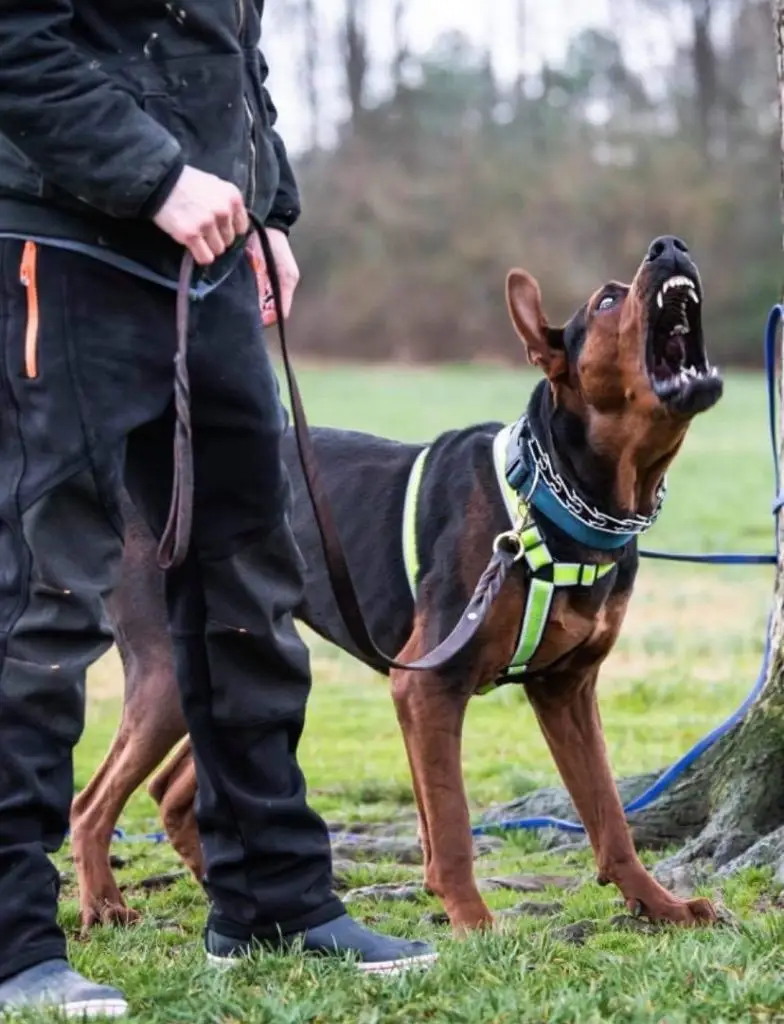
Deterrence vs. Protection
Understanding Graduated Response in a Family Protection Dog
At HighClass K9, protection is not a single behavior—it is a structured, graduated system designed to prioritize safety, control, and prevention in real family environments. What we train is graduated response, not impulsive behavior. The first and most commonly used layer is deterrence, and that is handler-initiated.
Deterrence Mode (Handler Initiated)
Deterrence is the first and most commonly used layer of protection. In everyday life, the dog remains calm, social, and neutral. When a situation feels inappropriate, the handler may initiate a specific deterrence command. This tells the dog to focus, alert, and actively discourage a potential threat through posture and vocalization. You’ll notice the dog becomes more intense in posture and voice, but remains completely under control. This deterrence mode is deliberate, reversible, and guided by the handler. You can turn it on, and you can turn it off at any time.
In real-world situations, this level of response resolves the vast majority of problems without any physical contact. Presence and bark are usually enough to stop someone from advancing.
Protection Mode (Last Resort)
Protection engagement is not automatic unless the dog detects very high levels of threat and is never based on emotion. Escalation beyond deterrence occurs only under clearly defined conditions where a credible threat is present and deterrence alone is insufficient. This layer exists as a safeguard—not as a default response.
The goal is not confrontation. The goal is prevention, control, and safety — especially in family environments.
This graduated structure allows families to maintain complete control while benefiting from a dog that can adapt appropriately to different situations. The emphasis is always on prevention, stability, and peace of mind.