
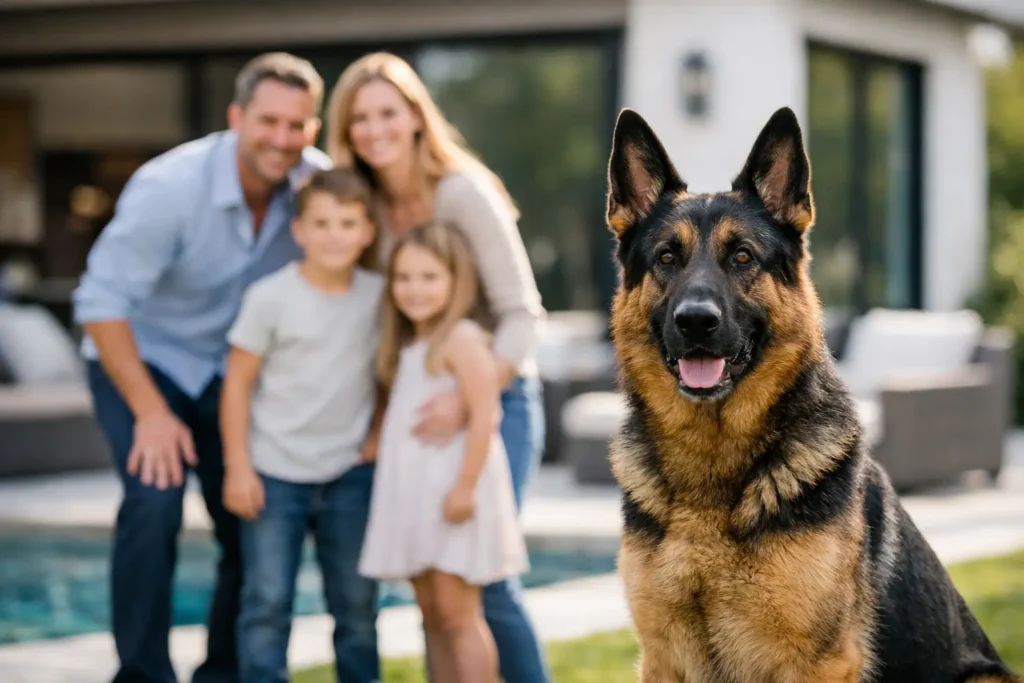
A protection dog should not change the feeling of home. The right dog settles beside the breakfast table, travels comfortably, welcomes familiar guests with composure, and gives the family a deeper sense of confidence when circumstances require it. This family protection dog buyer guide is designed for households seeking that rare balance: genuine companionship, credible deterrence, and protection capability that is calm, controlled, and appropriate to daily life.
The purchase decision deserves more care than choosing a breed, a look, or an impressive training video. You are selecting a living member of the household whose temperament, judgment, and relationship with your family will shape every day that follows.
Start With the Life You Want to Live
Before evaluating dogs, define how your household actually functions. A family that entertains often, travels between residences, has young children, employs household staff, or spends time at a second home needs a different fit than an executive who lives alone and wants a discreet companion for daily routines and travel.
A well-placed family protection dog should fit naturally into that rhythm. Security should feel present without becoming the center of family life. The dog should be affectionate and responsive at home, neutral around normal activity, and capable of recognizing the difference between routine social interaction and a meaningful concern.
Be candid during the consultation process. Discuss children and their ages, other pets, frequent visitors, travel expectations, property layout, household staff, and anyone who may share responsibility for the dog. A selective provider will ask direct questions because a correct match matters more than a quick placement.
The Family Protection Dog Buyer Guide: Temperament First
Temperament is the foundation of a successful placement. Protection capability without stability is not an asset to a family. A dog that is overly reactive, environmentally uncertain, difficult to settle, or uncomfortable with ordinary social pressure can create stress where you expected reassurance.
Look for a dog that is composed rather than performative. In practical terms, that means the dog can move through unfamiliar environments with confidence, remain attentive without constant agitation, and return to a relaxed state after stimulation. The dog should have a clear off switch – able to enjoy quiet time in the home instead of treating every sound, delivery, or guest as an event.
Affection also matters. The best family protection dogs build a genuine bond with their people. They should be comfortable sharing daily life, receptive to guidance, and emotionally steady around the members of the household they are meant to protect. A dog may be highly capable, yet still be wrong for a home if its personality does not suit the family’s energy and routines.
What to Observe During an Evaluation
Do not rely solely on a highlight reel. Videos can show obedience and control, but they cannot fully communicate how a dog feels to live with. Whenever possible, observe the dog in varied but ordinary contexts: settling indoors, walking in public, riding in a vehicle, meeting a handler, and transitioning from activity back to calm.
Pay attention to the details. Does the dog recover easily from distraction? Does it seek direction from its handler? Is its behavior clear and composed rather than frantic? Can it be affectionate without becoming intrusive? These qualities often reveal more about long-term household suitability than dramatic demonstrations.
Ask What the Training Means in Real Life
“Fully trained” can mean very different things depending on the seller. The meaningful question is not how many commands a dog knows. It is whether the training produces reliable, usable behavior in the situations your family is likely to encounter.
For a family home, advanced obedience should translate to practical control: coming when called, walking politely, holding position when needed, traveling calmly, and responding to family members with consistency. Controlled deterrence and situational protection should be balanced by discernment. The dog must be able to remain neutral when neutrality is appropriate.
Ask how the provider evaluates a dog’s decision-making, environmental confidence, and ability to transition between home life and public settings. Ask how the dog is introduced to your family and how you will be taught to communicate with it. A premium placement should leave you feeling prepared, not dependent on a handler’s presence to manage your own dog.
It is also reasonable to ask about limits. No responsible provider should suggest that a dog eliminates every security risk or replaces sound personal security practices. A protection dog is a powerful layer of confidence and deterrence, supported by thoughtful ownership, situational awareness, and clear household routines.
Health, Documentation, and Responsible Selection
A beautiful dog with polished obedience is not enough. Health and long-term soundness are central to the investment and to the dog’s quality of life. Request clear information about health testing, veterinary records, age, physical condition, and any relevant history that may affect future care.
Written health and satisfaction guarantees provide an additional measure of accountability. Read them carefully. A guarantee should be understandable, specific, and supported by a provider who remains available after placement. Vague assurances are not the same as a clear commitment to the dog and the client.
The placement process should also account for practical ownership considerations. Depending on where you live and how you plan to travel, discuss local regulations, homeowner’s insurance, property access, and transportation arrangements. Discretion is valuable, but planning is equally valuable. The goal is a dog that enhances your freedom rather than adding avoidable complications.
Evaluate the Provider, Not Just the Dog
The person or company behind the placement matters as much as the dog itself. You are trusting their judgment about temperament, training, health, and household compatibility. A serious provider does not pressure prospective clients toward the first available dog or make broad promises without learning how the family lives.
Look for a consultation process that feels personal and exacting. The provider should want to understand your priorities, not merely your budget. They should be willing to explain why a particular dog is suitable, where compromises may exist, and what support will look like after delivery.
There is a difference between purchasing a trained dog and entering a stewardship relationship. The latter includes thoughtful matching, client education, a deliberate transition into the home, and access to guidance as the dog settles into family life. High-Class K9 approaches placement with that level of personal accountability because the right outcome is measured months and years after delivery, not on the day the dog arrives.
Questions Worth Asking Before You Commit
A focused conversation can reveal whether a provider is equipped for a premium family placement. Ask these questions directly:
- How was this dog selected for family life, not simply for protection work?
- What does a typical transition into a new household look like?
- How will my family learn to handle the dog with confidence and consistency?
- What health testing, records, and written guarantees are included?
- Who will be available if questions arise after placement?
- How do you assess compatibility with children, guests, pets, staff, and travel?
The answers should be calm, specific, and tailored to your circumstances. Be wary of sellers who speak only in absolutes, avoid discussing limitations, or seem more interested in intensity than stability.
Plan for the First 90 Days at Home
Even an exceptionally trained dog needs time to understand a new home, new people, and new routines. The early weeks are not a test of whether the dog is “working.” They are the period in which trust, consistency, and clear communication take root.
Establish predictable feeding, exercise, rest, and household access routines. Follow the transition guidance provided during placement, especially around guests, children, travel, and introductions to other animals. Everyone in the household should understand the basic commands and expectations, even if one adult serves as the primary handler.
Avoid turning the dog into a constant security exercise. A settled home life is part of what allows a well-trained dog to remain clear-headed and reliable. Give the dog structure, affection, appropriate activity, and space to rest. The result is not a dog that feels perpetually on duty, but a companion that is confident in its role and deeply connected to its family.
The right protection dog is not chosen because it looks imposing. It is chosen because, in the quiet moments and the uncertain ones alike, it brings steadiness to the people it calls home.